| |
| RE: ✦ Alienation-based Psychological Theriantropy |
|
Posted in: Explanations of Therianthropy Posted by: LemLem - 2026-10-28 10:07
|
|
 To answer your questions right away, and through, possibly reflect on the essay itself:
Did you feel disconnected from humanity before recognizing your nonhuman identity, or did that feeling develop afterward? Do you feel your nonhuman identity developed independently of your relationship with human society?
I've personally acknowledged my nonhumanity before I became aware/capable of understanding there was a wider human society to begin with, particularly my phantom wings. That was also around the time when I insisted that I was an anthropomorphized bear, though that phase fizzled out eventually.
My disconnect from humanity came once humans moved away from defaulting to my needs and desires, so away from childhood games and imaginative play and arts and abstract competition to a more concrete path towards reaching adolescent, then adulthood milestones. Goals which held no meaning or appeal to me, values that feel backwards. That is when, having been left alone on my side of the trench, I began wondering what am I if not a human like them.
So it evolved independently, but I wouldn't have realized it's deviant from human experience, wouldn't human society disappoint and frustrate me to its core.
Does the idea of nonhuman existence appeal to you because it seems more immediate or less burdened by human social expectations and/or abstract thought?
Nonhuman existence 'appeals to me' because it explains and validates my needs and desires and boundaries that seem in discrepancy from human ones, takes away possible shame and pressure to perform something alien to me. I feel confident to identify as my 'type instead of a human because it fits those much better. But it's also more than just environment that makes life, it's also the body you're experiencing the world in, and being Fae means being free of the corporeal shell I'm so uncomfortable in.
Have neurodivergence, trauma, disability, or other life experiences, such as your race or queerness, shaped how you relate to humanity or to your nonhuman identity? (Share only what you're comfortable discussing. I've read many threads on this forum about this question, so I already know that many of us see at least one of these aspects as fundamental to our identity.)
I'm neurodivergent, and that definitely introduces needs and functioning of the brain that the neurotypical world doesn't know how to handle and often doesn't like accommodating, but I grew up in a very neurodivergent-centric environment, and still grew alienated from my peers. At the end of the day, the people who fall within my marginal identities are still people, still human, with the same set of basic truths and aspirations I disagree with.
If alienation can lead people in so many different directions, what do you think makes an animal identity resonate specifically?
Many critters here inform their 'type search on mannerisms and body language that doesn't align with the 'correct' human one. Animals are well researched and, most importantly, observable, so it is possible to learn the patterns in their behaviour and lifestyles, which are then concrete frameworks for critters who don't feel human to compare with. With mythical creatures, extinct species, or even concepts, it's much harder to dig up any confirmable information to relate to.
It can also feel like a more concrete, confident explanation to present when confronted with why you feel a certain way about things that are natural to humans, why you seek solitude, etc., a more final argument than just calling yourself a recluse.
|
|
| RE: ✦ Alienation-based Psychological Theriantropy |
|
Posted in: Explanations of Therianthropy Posted by: Savva - 2026-10-28 4:09
|
|
 Edit History
- October 29th, 2026: Removed some repetitive thoughts from the sections about The perceived simplicity of animal existence and The burden of human sapience. Added a paragraph about the observability of animals based on LemLem's thought. Added a paragraph on Timothy Treadwell. Shortened some sentences all over the essay for brevity.
- November 4th, 2026: Added a paragraph on imprinting onto animals during childhood or tumultuous periods in one's life, which seems relatively common in therians.
Acknowledgements
- @LemLem: Source of the idea that animals may have an increased chance of being a person's -type due to their observability, therefore ease of learning and recognizeability of one self in the creature.
- Ursz (my wife): Suggested mentioning Timothy Treadwell that could be considered a therian by the way he talked and interacted with bears, even though he did not self-identify as one.
|
|
| ✦ Alienation-based Psychological Theriantropy |
|
Posted in: Explanations of Therianthropy Posted by: Savva - 2026-10-28 3:09
|
|
Strap in, this is a long ride! I've been working on this essay
ever since I've registered on TG, and have thought about it for way longer than that.
Alienation-based Psychological Theriantropy
I've been thinking about some possible psychological factors behind therianthropy and wanted to share a theory I've been developing. I'd love to hear other people's thoughts, experiences, and criticisms!
This isn't meant to explain every therian's experience. I'm interested in exploring a possible connection between feeling alienated from humanity, being overwhelmed by it, and finding a sense of belonging in an animal identity.
Alienation
I wonder whether feeling disconnected from humanity or human society might be one possible pathway to therianthropy.
Human life is full of complicated social expectations, unwritten rules, cultural norms, and responsibilities. We're expected to understand how to behave around others, build relationships, pursue certain goals, and fit into a society with its own ideas about what a normal or successful life looks like.
Not everyone finds this natural. Some feel as though they're constantly trying to understand a world everyone else seems to navigate effortlessly, others disagree with the rules they're expected to follow. Our modern socioeconomic systems are also far removed from the environments in which humans evolved.
This can create a sense of alienation: feeling like an outsider, fundamentally different from other people, or simply not at home in the human world.
I wonder whether, for some therians, this feeling could contribute to the appeal of a nonhuman identity. That doesn't necessarily mean disliking people or struggling to form relationships. Someone can have friends, love their family, and enjoy human company while still feeling disconnected from humanity as a whole. They might participate in human society while feeling they must suppress parts of themselves to fit in.
Alienation can take different forms:
- Social: struggling to fit in with others.
- Cultural: rejecting society's expectations and values.
- Existential: feeling disconnected from what it means to be human.
P.S. Marx also had some interesting ideas about alienation under capitalism: how workers can become estranged from their labour, the products they create, one another, and even their own species-being. I wonder whether this kind of alienation might contribute to feeling like a lone speck in a world of institutions and machine. I'll leave the political side of this topic for another essay!
The perceived simplicity of animal existence
Human society is extraordinarily complicated. We have jobs, money, laws, bureaucracy, social hierarchies, and expectations about our futures. Many of our worries aren't about immediate survival, but about the systems we've built around it.
Animal life can look very different, at least from a human perspective. An animal's needs seem easier to understand: finding food and water, seeking shelter, avoiding danger, exploring, and interacting with others. Its life appears more directly connected to its body and surroundings than to layers of social expectations.
Of course, animal life isn't objectively easy. Animals face hunger, injury, competition, predators, and complicated social relationships of their own. What interests me is the perception of simplicity.
For someone overwhelmed by human society, animal existence might feel more tangible, closer to one's surroundings, and basic needs. Most of us are far removed from the processes that sustain us: building shelter, hunting or growing food, and finding water. Our survival depends on complex systems that separate us from the things we need to live, making even fundamental needs feel abstract. Animal life, by contrast, may appear more straightforward, with a more direct connection between an animal's actions and its immediate needs.
The burden of human sapience
There’s another aspect of the human experience worth considering: our own minds.
Human sapience allows us to imagine, plan, and reflect, but it can also become exhausting. We worry about things that may never happen, replay embarrassing moments, imagine every possible failure, and get caught in spirals of anxiety or unanswerable questions. Our self-awareness can make us painfully conscious of our flaws, social standing, mortality, and the uncertainty of existence.
For some people, the mind can feel less like a tool they control and more like something they can’t escape. I wonder whether this might contribute to the appeal of animal identity. When imagining life as an animal, one might picture an existence less dominated by abstract worries and constant self-evaluation.
This isn’t to suggest that animals are mindless or free from suffering. Many have complex cognitive abilities, emotional lives, memories, and social relationships. Rather, I’m interested in how humans might imagine animal existence when exhausted by their own thoughts. It’s kind of ironic: imagining an existence free from human worries is itself an exercise of the cognition that can amplify those worries.
Within this theory, the burden of human sapience could be another source of alienation. Someone might feel not only out of place in human society, but also exhausted by their own mind, which might contribute to the appeal of a nonhuman identity.
The role of neurodivergence, trauma, race, queerness, and disability
Belonging to various marginalized groups can contribute to alienation, particularly through the ways people are expected to behave, how they're treated by others, and how comfortably they can exist in the world around them.
A neurodivergent person might find certain social conventions confusing or exhausting, or feel compelled to mask to avoid standing out. Someone who has experienced trauma might struggle to feel safe around others. A disabled person might face inaccessible environments, stigma, or expectations that don't account for their needs. People of color may feel alienated in predominantly white spaces, particularly when they experience racism, stereotyping, or pressure to navigate cultural expectations that don't reflect their own. Queer people may feel similarly when surrounded by assumptions about gender, sexuality, relationships, or what a conventional life should look like.
Such experiences can leave someone feeling that the human world wasn't built with them in mind. However, none of these experiences is a requirement for therianthropy, nor does any of them automatically explain someone's identity. Not every person belonging to said groups feels alienated, and not everyone who feels alienated has these experiences.
Someone might simply have different interests, values, or priorities. They might feel out of place because their personality doesn't fit their environment, their interests or political views are uncommon where they live, or they've never felt particularly connected to mainstream culture. All of yhese factors may contribute to alienation in unique and individual ways.
Why animals, then?
Alienation from humanity doesn't automatically lead to animal identity. People respond to it in many ways, from alternative communities and creative pursuits to spiritual movements or a more solitary lifestyle. So what might make a nonhuman identity resonate specifically?
I suspect alienation alone isn't enough. There may also be an existing affinity for animals, a particular experience of one's body, or a sense of self that doesn't fit within human categories. Many therians report phantom sensations or feeling that their body doesn't match their internal sense of self, which may be analogous (or, somewhat opposite) to body integrity dysphoria. This condition usually means a desire to get rid of an existing limb, while the therian experience is generally a desire to have a limb your theriotype possesses, or for your limb to match that of the animal.
Animals might also feel easier to understand than humans, with more tangible needs and interactions that seem less dependent on complicated social conventions. For others, animal identity may offer a connection to the body, senses, environment, or instinct, or hold spiritual or emotional significance. Cultural associations with different species can shape these connections, too.
Additionally, a strong connection to animals may stem from imprinting onto them, most commonly in childhood or during a difficult period of a therian's life. Animals can offer comfort, companionship, and understanding when these things are lacking in human relationships. They can also become role models whose behaviors may seem more intuitive and straightforward, while human actions may be confusing through the eyes of a child, or a victim of abuse. I wonder whether this helps explain the prevalence of canine and feline theriotypes, given how commonly cats and dogs are kept as pets.
Another factor may be how observable and well-understood animals are. Many therians look to their mannerisms and body language, especially where these differ from what's expected of humans, when exploring their theriotypes. Animals are extensively studied and, more importantly, can be observed directly to learn about their behaviours. These patterns can offer concrete points of reference for people who don't feel human to compare themselves against. With mythical creatures, extinct species, or more abstract concepts, it's often much harder to find reliable information to relate to. (Courtesy of LemLem)
Still, I wouldn't want to reduce therianthropy to identifying as an animal because it represents qualities one admires or finds relatable. The experience can be much more fundamental to someone's sense of self.
Perhaps these factors can intersect with alienation to make a nonhuman identity meaningful, though this won't apply to everyone. Personally, I haven't met many therians who seem entirely comfortable in human society. I wonder whether this varies between species, particularly for those associated with strong social bonds or close relationships with humans, like dogs. I'd be interested to hear others' experiences.
A personal example
Part of what led me to this theory was reflecting on my own experiences. I can hold a job and be social, I’m generally able to make friends and interact with people, but I don't always feel comfortable being myself around them.
Social interaction can feel like following a set of mental rules: how I'm supposed to behave, which parts of my personality are appropriate to show, and whether certain interests might seem embarrassing. I can participate in human social life while presenting a version of myself that's easier for others to understand. There are spaces where I feel freer to express interests I'd otherwise keep to myself, such as niche online communities. Animals have also often felt easier to understand and relate to than people.
For me, the distinction between being able to function in human society and feeling like yourself in it has become an important part of how I understand my own nonhuman identity.
Of course, this is only my experience. A therian might feel deeply connected to human society and still experience a strong nonhuman identity. I include this example because outward social functioning doesn't necessarily reflect someone's internal sense of belonging.
Humanity's history with animals
I also wonder whether our long history with animals provides some context. Humans have lived alongside animals throughout our evolutionary history, relying on them for survival while developing deep cultural and spiritual connections with them. Animism, one of humanity's oldest and most widespread forms of religious belief, reflects worldviews in which animals and other parts of the natural world may possess spiritual significance or personhood.
Throughout history, animals have been revered, treated as kin, and associated with powers beyond the purely practical. These traditions don't establish that ancient people experienced therianthropy as we understand it today, but they show how deeply animals have shaped human understandings of existence. Beliefs in human-animal transformation also appear in many cultures, sometimes connected to spiritual practices or rituals.
Perhaps this longstanding connection helps explain why animal identity can hold such profound personal meaning for some people.
Identity and choice
People sometimes treat identity as either something we consciously choose or something completely fixed and unchangeable. I think there's room between these extremes, and that the therian community may sometimes place too much emphasis on therianthropy being entirely involuntary.
We can choose how to express ourselves: which labels to use, which communities to join, and how much of ourselves to share. But we can't necessarily choose the underlying feelings, preferences, or experiences that make these choices meaningful.
Consider someone who rejects modern society and technology (a Luddite, for this example) and would prefer a quieter life away from them. They might have to remain in modern society out of necessity, but that doesn't mean they can simply choose to enjoy the things they find alienating. Internally, they remain a Luddite, even if the life they’re living is forcing them to perform as an average person.
A more complicated example might be Timothy Treadwell, known as Grizzly Man, who felt a profound connection to bears and saw himself as one with them, despite not identifying as a therian. His experience raises an interesting question about the relationship between how we understand ourselves and the labels we use to describe that understanding. I'm not looking to discuss the ethics of his actions or their impact on the bear population he lived alongside, as that's outside the scope of this essay.
I think the same distinction matters when discussing therianthropy. Choosing a label or how to express an identity doesn't necessarily mean choosing the internal experience itself. An identity might develop through temperament, personal experiences, and self-understanding without being a conscious decision. This doesn't mean identities are necessarily fixed from birth or can never be reinterpreted. It simply means that experiencing an identity and choosing how to understand or express it are different things. We may not choose what we feel, but we can still have some agency in how we make sense of it.
Conclusion
Putting these ideas together, I wonder whether one possible pathway to therianthropy might look something like this:
- A person has certain traits, experiences, interests, or ways of understanding the world. These shape how they relate to humanity, their own consciousness, and the nonhuman world.
- They may feel alienated from human society, overwhelmed by its expectations, exhausted by their own thoughts, or simply more connected to animals. Trauma, neurodivergence and disability may be large contributors in said feelings.
- These feelings may intersect with an existing affinity for animals or a particular sense of identity or bodily experience, making a nonhuman identity especially meaningful to them.
- Over time, these experiences may become part of how they understand themselves, even if they initially lack the language to describe them.
This isn't a universal sequence. Someone might recognize their animal identity before feeling alienated from humanity, or feel at home in human society while still experiencing a strong nonhuman identity. Alienation might shape how someone understands their identity rather than cause it, and vice versa.
Many people feel alienated without identifying as nonhuman, and some therians experience little alienation. I see this as one possible explanation for some experiences, not a universal theory of therianthropy.
I wonder if, for some people, animal identity resonates because it offers a way to understand themselves outside the expectations and complication of human life. Animals might represent an existence that feels more immediate, embodied, and connected to the environment, while our long relationship with them gives them a powerful place in our imaginations.
I also wonder whether modern life is so far removed from the conditions in which Homo sapiens evolved that it can leave us feeling disconnected from our own nature. Perhaps identifying as a nonhuman animal can feel more authentic, or better reflect a desire for a way of living that feels more instinctive and embodied.
And perhaps, for some people, the experience has nothing to do with alienation at all.
I'd love to hear what others think:
- Do you feel alienated from humanity, or comfortable being part of human society?
- Did you feel disconnected from humanity before recognizing your nonhuman identity, or did that feeling develop afterward?
- Does the idea of animal existence appeal to you because it seems more immediate or less burdened by human social expectations and/or abstract thought?
- Have neurodivergence, trauma, disability, or other life experiences, such as your race or queerness, shaped how you relate to humanity or to your nonhuman identity? (Share only what you're comfortable discussing. I've read many threads on this forum about this question, so I already know that many of us see at least one of these aspects as fundamental to our identity.)
- Do you feel your animal identity developed independently of your relationship with human society?
- If alienation can lead people in so many different directions, what do you think makes an animal identity resonate specifically?
Special thanks to everyone who has shared their theriantropy theories and experiences on this forum, as they have been fundamental to my ability to write this essay.
|
|
| RE: The Human Mind and Therianthropy |
|
Posted in: Explanations of Therianthropy Posted by: Zalv1xar - 2026-10-18 2:14
|
|
(2026-10-17 18:30)Lupus Ferox Wrote: Zalvixar, I like the way you write, so I hope you continue to write your thoughts down! Why do you feel that we don't have to take you seriously? It's written down here for a reason and therefore has to be taken seriously. One note, when I thought of myself as a wolf, as a five-year old, I didn't picture it as an animal that only had positive connotations. In fact, I didn't ascribe any connotations to it, the wolf's an animal like any other. I just happened to be one and that's the end of it. Not a mention of critique, though. The belief among wolf therians that they're loyal just because the physical wolves are is a bit nonsensical, if you ask me. If this were to be the case, mafia members would be prone to being wolf therians because they're loyal to their families. It's not really right to ascribe human traits to animals as in copy them from the one species unto the next with ease. At least I think so. But who am I to claim such a thing?
I do dig what you said regarding the alienation. Something was off in my youth, I didn't get the connections I craved for. Humans weren't my cup of tea. Back in the beginning, it was difficult even to shake hands or greet somebody with a clear voice. Only my own family members and people in it I felt close to were greeted the way you'd expect. I was a very introverted child, afraid of everything new. It took me hours to get into somebody else's home, and feel relaxed in it. Not to mention the pressure from greeting all kinds of strangers and having to talk to them when it was expected to. The family didn't get this of course but they never took my troubles with this into account. Same for shopping or taking public transport by myself. Too many people, too much possible interaction. But yeah, maybe being a wolf did have some advantages as well as disadvantages. Maybe you're right. Lovely post, too.
Thanks for the feedback! I onluy made the connection of loyalty and stuff because that's how most people put it, But you are right!
|
|
| RE: The Human Mind and Therianthropy |
|
Posted in: Explanations of Therianthropy Posted by: Lupus Ferox - 2026-10-17 18:30
|
|
 Zalvixar, I like the way you write, so I hope you continue to write your thoughts down! Why do you feel that we don't have to take you seriously? It's written down here for a reason and therefore has to be taken seriously. One note, when I thought of myself as a wolf, as a five-year old, I didn't picture it as an animal that only had positive connotations. In fact, I didn't ascribe any connotations to it, the wolf's an animal like any other. I just happened to be one and that's the end of it. Not a mention of critique, though. The belief among wolf therians that they're loyal just because the physical wolves are is a bit nonsensical, if you ask me. If this were to be the case, mafia members would be prone to being wolf therians because they're loyal to their families. It's not really right to ascribe human traits to animals as in copy them from the one species unto the next with ease. At least I think so. But who am I to claim such a thing?
I do dig what you said regarding the alienation. Something was off in my youth, I didn't get the connections I craved for. Humans weren't my cup of tea. Back in the beginning, it was difficult even to shake hands or greet somebody with a clear voice. Only my own family members and people in it I felt close to were greeted the way you'd expect. I was a very introverted child, afraid of everything new. It took me hours to get into somebody else's home, and feel relaxed in it. Not to mention the pressure from greeting all kinds of strangers and having to talk to them when it was expected to. The family didn't get this of course but they never took my troubles with this into account. Same for shopping or taking public transport by myself. Too many people, too much possible interaction. But yeah, maybe being a wolf did have some advantages as well as disadvantages. Maybe you're right. Lovely post, too.
|
|
| The Human Mind and Therianthropy |
|
Posted in: Explanations of Therianthropy Posted by: Zalv1xar - 2026-10-14 19:09
|
|
The Human Mind and Therianthropy
By Zalvixar
NOTE: DO NOT TAKE THIS SERIOUSLY, PLEASE. THIS IS ONLY A THEORY. ALSO THIS IS NOT THE FINISHED PRODUCT.
Therianthropy can look like many things. For some, It may be a sign of mental illness or a disordered mind. For others, it is something to point at and laugh about. For many, It is an excuse to morph into the most degenerate, hateful version of themselves. But what is it, Really? And could it be a sign of a deeper cause within the roots of Human Society?
To understand Therianthropy, One must understand not all therians, and most of them are not, Lycanthropes. Lycanthropy is a delusion disorder and is very rare. So why are so many humans identifying with animals?
Coping mechanisms in Dissociation
It is with potential that most Therians experience dissociation, especially in the form of “Shifts”. Now, this does not mean that they have a dissociative disorder. Dissociation can be caused by a variety of things, such as stress, to name one. People do not have to have a dissociative disorder to experience dissociation. And while DID, OSDD-1a and OSDD-1b could be potential explanations in the form of Feral Alters, or Animal Alters, This is NOT the only possible explanation as many therians are NOT and do not suspect they are systems.
Childhood Dehumanization and Alienation
Many things can cause children to alienate others. Neurodivergence, to name one. When children are alienated from their peers, especially from a young age, They may or may not attach themselves to another figure. In some cases, these figures are animals, which often symbol loyalty, bravery, or some other positive sense of self.
|
|
| RE: Therianthropy as a connection |
|
Posted in: Explanations of Therianthropy Posted by: Nimthe - 2026-10-08 9:20
|
|
 I often wonder about the legitimacy of my identities as a therian growing up. I had the same inward debate, if my identity changes over time, was it legitimate? Logic applied to any psychological phenomenon is very important to me, so the gap in explanation was worrying. My worries are starting to be smoothed over reading through this thread.
Before anything, I was very magnetized toward big cats, tigers and leopards and jaguars most notably. Then, dogs and wolves in late elementary school, which feels unusual now because I have been so distant from canid identity for so long. I was staunchly maned wolf for very scientific and Research Based reasons when I was in my early teens/preteens, then I questioned gargoyle, demon (energy feeding) for a bit as I reckoned with self-hate and feeling grotesque, inanimate, villainous/emotionally toxic (in mid-early teens, makes sense). And probably for about three or so years now, I have been solidly puma and vaguely primate/simian, and half the time a blend of both felid and primate, a sort of physical Beast. The blending of identities makes sense here, because I don’t necessarily feel individually primate or singularly puma, but I resonate with both species individually and feel physically/mentally oriented to a blend of both animals’ traits. Simian is partial reckoning with the status of being animal but in human form, I am eased by the similarity in our bodies and the ways I can learn to move in observation of primates. Puma for me is based on my general felid-ity, resonance with the physical movement and posture of the puma in person and in footage, and the environment I was raised in. A specific ecosystem and range of plants and weather and prey I am accustomed to, so in that sense my connection is very physical and developmental because I grew up in the same habitat as the local pumas I resonate with.
I was very hung up on narrowing down my species with data and precise shift analysis when I was younger, but life is so difficult now just to get by that it is more important to me to tap into the animality in me rather than cage and label it. I want to focus on my consistencies over my life and my instinctual connections, not my inconsistencies or pathologizing. Thanks for this thread, reading through its basis and responses smoothed my fur and made me feel a bit more at ease with my theriotype history.
|
|
| RE: Wolf Theory/animal knowladge theory |
|
Posted in: Explanations of Therianthropy Posted by: Feathers - 2026-10-05 0:51
|
|
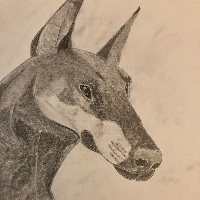 I’m glad someone made a thread for this as it’s something I’ve often thought about.
I don’t know about anyone else, but I definitely went through a time where I believed I was a wolf, specifically a werewolf. This was long before I knew anything about Therians, Otherkin or Fictionkin.
My personal thoughts on the amount of wolves and questioning wolves is misinformation. Most people think of wolves first when they’re looking for their type. It’s an animal popular in the media and easy to relate to. I have a feeling that most of them haven’t done much research, and just settle on the quickest one. They could be dholes, dingos, jackals, hyenas or whales. Maybe even insects like wasps, bees or ants.
Of course, this doesn’t mean that all of them are misinformed. Some of them are really wolves that know that. I definitely think it’s worth doing research before claiming a theriotype.
On the idea of the animal knowledge theory, I think it’s a good one, but not necessarily applicable to many alter humans.
For example, I knew nothing of Perytons before I started researching, but all of my non-human behaviors line up, right down to the shadow.
On the fictionkin side, I’m currently considering a Wolverine type (from X-men). He’s a character I knew very little about, but when I started by research, everything started to click. So it’s not that I watched the movie and thought he was a good character, it’s just that the media finally put a name to what I’d been feeling for years.
That all being said, I think the Animal Knowledge Theory does hold some amount of weight to psychological Therians and otherkins. It seems to me like another form of imprinting but with knowledge instead of being around the animal though this is not to say it’s not a valuable thought.
I’d like to hear from everyone else on here, what is your take on the theory?
|
|
|


 Just a note that you won’t be able to edit it after 2 weeks. That’s when the “no longer editable” cutoff is.
 Hey just letting you know that we took care of this yesterday.