| |
| RE: Why is therianthropy involuntary? A definitional boundry. |
|
Posted in: Introduction to Therianthropy Posted by: Bloeien - 2026-09-12 11:20
|
|
 I label my therianthropy as involuntary because it is not up to me when I want to growl or when I am behaving animalistic. I dont get to choose where or when I am like that. Yes, there are specific moments and situations that trigger the animal like responses but I cannot choose that in this very moment I will act or feel as a wolf. I mean shifts and etc.
I can consciously try to trigger it but that is not, what I think therianthropy is about. My wolf behaviour comes and goes independently on what I think or whether I want it or not.
Yes, I chose I will call myself therian and yes, I chose to label myself as a wolf because that is the closest thing which is fitting my experiences.
|
|
| RE: Why is therianthropy involuntary? A definitional boundry. |
|
Posted in: Introduction to Therianthropy Posted by: corvidjay - 2026-09-11 1:19
|
|
 My us$0.02 worth...
Is it voluntary or involuntary if something in you changes, but you do nothing to stop it? That's pretty much my case, It never even occurred to me to question my avian nature, much less that I ought to not be that way.
In fact, there were a couple of times in my life when I "voluntarily" tried to be more "normal" to fit in a bit better, but it never lasted. Without my avian self I just wouldn't be me.
Like a lot of these sorts of questions, I suspect the answer will be somewhere in between, or be a range rather than a single point.
|
|
| RE: Why is therianthropy involuntary? A definitional boundry. |
|
Posted in: Introduction to Therianthropy Posted by: Syraphin Faelad - 2026-09-10 9:58
|
|
 I think id say something along the lines of, my non human identity is involuntary because i didnt choose it.
Nothing about what i experance is because i wanted to act or behave in that manner. I didnt choose to be different from the mjority in a way thats been detrimental. Why would anyone choose to be something that triggers abuse. Yet i lent into it to find myself.
I think time is a crutal component here to, particularly with youngsters who are discovering themselves. That period in life when so much is involentry and confusing yet its what you come out of that period that which defines yourself. Again not chosen but descovred or realised. Yes it can happpen later in life when you stop being what your told you are or what you think you should be. Again they are concous choices that are abandoned for the truth of your idenity.
Just my casual ramberlings
|
|
| RE: Wolf Theory/animal knowladge theory |
|
Posted in: Explanations of Therianthropy Posted by: JaybirdSinging - 2026-09-08 2:38
|
|
@FogLikesFeathers14
I definitely do agree with this a bit. I think that growing up around a cat/s as my biggest companion certainly influenced my therianthropy a lot. And while I don't think it explains my spiritual therianthropy, it's what I use to explain my psychological therianthropy for my housecat(I believe) Theriotype. I can also see this for my bird theriotype as I loved bird watching as a kid and still do. I can recall looking to feathered friends in times of despair and just as a way to decompress.
I feel like I'm rambling so I'll stop. In short I agree.
|
|
| RE: Wolf Theory/animal knowladge theory |
|
Posted in: Explanations of Therianthropy Posted by: DyadDryad - 2026-09-07 0:13
|
|
(2026-09-05 20:01)FogLikesFeathers14 Wrote: Hello!
I think that because a wolf is just one of the most commonly known animals also many easily destinct emotional behaviors (Growling, Howling, Snarling, etc.) it comes out more as an animal most people feel connection to. I feel wolves are closely linked to the environment around you. They are also ancestors of our 'man's best friend' dogs, which, people have as pets. Growing up with a dog may influence canine behaviors as well.
I think it's also interesting to consider the other angle of implication that you could draw from this! Which is to say, there are probably folks out there who would learn of their own therianthropy if they only had knowledge of a more niche species!
|
|
| RE: Wolf Theory/animal knowladge theory |
|
Posted in: Explanations of Therianthropy Posted by: Genderfluidredfox - 2026-09-06 21:51
|
|
(2026-09-05 20:01)FogLikesFeathers14 Wrote: Hello!
SO, as described in the title, I want to describe a theory that I believe on why the theriotype wolf comes up so often as a theriotype in early therianthropy.
To most therians, you are between the few:
Canine
Feline
Or just land mammals
I think that because a wolf is just one of the most commonly known animals also many easily destinct emotional behaviors (Growling, Howling, Snarling, etc.) it comes out more as an animal most people feel connection to. I feel wolves are closely linked to the environment around you. They are also ancestors of our 'man's best friend' dogs, which, people have as pets. Growing up with a dog may influence canine behaviors as well.
Which leads me to the next part of my theory the Animal Knowladge Theory. This theory I know will not apply to all therians but I feel most of the common. This theory is simply, in easy terms: If you know lots about the animal and maybe even possibly enjoy that animal that it may influence your therianthropy.
I believe this because there may be an animal that you grow up loving and later on you notice, "wow, I feel like I have picked up these behaviors and feel very close to this animal, I have felt shifts and animalistic behaviors because of this" thus leading to therianthropy or even just alterhumanity. This could apply to therin, otherkin, and fiction kin as well as the many other terms.
Any thoughts?
From a psychological perspective, I definitely think that because cats and dogs are very widespread in our culture, it makes sense that many therian experiences manifest as canine or feline. As a system we do think our red fox alters were influenced by having cats as a kid, and our tawny owl alter was influenced by having chickens - we felt safe with our pets and not with humans. Having wild animals rather than domestic ones as alters also makes sense for us (i.e. fox rather than cats, owl rather than chicken) based our our emotional state and strong desire for freedom and to be able to escape our home environment.
But it's still interesting how therianthropy can manifest at such a young age, before we could presumably know loads about certain animals - our fox alters emerged at ages 4-6. Or did we know more than we think about foxes at the time somehow, and have forgotten because we were so young? Also you're right that this theory doesn't explain less common theriotypes, like our sea otter alter - not sure we really knew what a sea otter was before he split off at age 7-8ish, but our brain must have done somehow. Or is it a combination of starting to develop feelings/experiences that are animalistic, and the brain subconsciously identifying similarities with animals you see/hear about, and over time developing further in line with that specific species?
|
|
| RE: Wolf Theory/animal knowladge theory |
|
Posted in: Explanations of Therianthropy Posted by: Aramantis - 2026-09-06 12:27
|
|
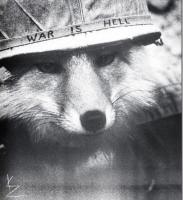 @Ocypus_Olensss yeah though honestly, as I stopped considering myself a fake therian [this was annoying as hell because I know I’m a therian, but I have some problems with trusting myself], I will keep doing research about my theriotypes. Its weird, i do relate to foxes, but also dogs, mostly german shepherds, but I hate the idea of being on a leash or the dog loyality, something about the idea of owning someone just disgusts me[i have no ecperience with that so idk why]. I also love backing but in the dog way. That probably means nothing yeahh
Anyways, the fox is not all the truth and I need to see if I havent mistaken this identity with other animal I didn’t know about.
Thanks for the Reynard idea ^^
-Aramantis
|
|
| RE: Wolf Theory/animal knowladge theory |
|
Posted in: Explanations of Therianthropy Posted by: WildGeist - 2026-09-06 0:05
|
|
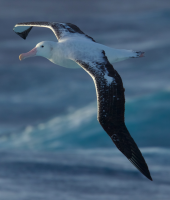 There are probably no two therians with the exact same experiences, even if they share the same theriotype, and there's no single true answer to a lot of the "why" and "how" questions.
Of course, I do have my own ideas on the abundance of wolves/canines. Likely nothing that hasn't been brought up before.
For one, like you already said, wolves are incredibly widespread and most human cultures are familiar with them.
It's an iconic and very familiar animal, considering humans and wolves (dogs) have lived alongside each other for tens of thousands of years.
Both are surprisingly similar, especially in social structure, a lot of behaviour and, I believe, emotionally as well. They're not difficult to relate to.
The wolf is in many ways considered an embodiment and the quintessential symbol of the wild, especially in Western cultures.
When thinking of a generic, universal "man-beast", most people will also likely picture a werewolf.
I think it makes a lot of sense that so many young therians and people exploring their identity gravitate towards the wolf at first, whether that's the real animal or a romanticised archetype.
Can't personally relate to the "animal knowledge" (imprinting?) thing, though.
This may be the case for some, but I haven't considered wolf as a theriotype until after I learned about therianthropy, and I've felt nonhuman since way before that.
I was completely obsessed with dinosaurs and dragons all throughout my childhood (I still am) and grew up with cats, not dogs.
Werewolves and wolves came later and it only really started to "click" for me when I learned more about them through documentaries, movies and books.
I have no clue why I'm a wolf. I used to wish I wasn't, mostly because it's the single most common theriotype, but every time I question and analyse it, I come back to the same conclusion. These days, I don't care and am quite okay with being me. 
|
|
| RE: Wolf Theory/animal knowladge theory |
|
Posted in: Explanations of Therianthropy Posted by: Ocypus_Olensss - 2026-09-05 22:32
|
|
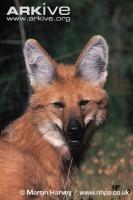 I am quite new to the therian sphere of communities online, and from what I read I personally think this is a question better left unanswered, in a way (that's funny from me since I am quite inquisitive)
It makes sense to me why people may relate to wolves both spiritually and psychologically, my theory is that they may relate to another social meat-eating animal that may not even be canine, eg. otters, hyenas, vultures or even wasps! I also think that there are more mammalian therians because mammalians are closer to us and easier to relate, and also normally people know more mammalian species than other animals!
I guess my therian experience was an odd one, although I love studying about species who stand in a odd point taxonomically, specially endemic species, I have never shown much interest to maned wolves, nor I felt any connection to canines. I actually went through a patch in my life where i developed a phobia of dogs, and I also am still not fully comfortable around them, it's like, I find them cute and all but I don't like their smell nor I'd live with one. With a mix of constant visions, behaviours of mine and phantom shifts, and some spiritual things (and some later deeper research) I realised I am a maned wolf, but I would never have guessed if I didn't have the knowledge I have on different animal species and behaviours, I would have just assumed I was a wolf, fox or coyote of sorts.
To close this off, even if a person's actual theriotype may be something like a bony eared ass fish or a Falklands islands fox, if they relate to wolves and "wolf activities" makes them feel better, I guess sometimes it's better not throw them again to a whole questioning process, unless they are willing to! Ontop of it I think since there are many wolf therians, I guess it makes it easier for them to form packs, eg. someone is a sea otter, but they can find companionship easily because they identify as a wolf, and they can feel included among other wolves, since they never found another sea otter therian, idk if this makes sense hsgdjhgshg
Buuuut I do have a project coming up to aid in this, I'll be making a behavioural bestiary of sorts so people may find they species more easily, even if its a less known one! Its among my threads if you are curious
-
Also @Aramantis if red fox is truly how you feel, dont let others opinions change you, remember what you feel was not a choice, it was involuntary and its simply who you are. As my mother says "Not even Jesus satisfied everybody, he was made perfect and yet he got crucified for who he was" not meaning this in a religios way but, you cant appease to everyone, someone will always have something to complain about you and thats okay! You owe them nothing, the only person in place to judge you and make choices for you is yourself! But if you do feel bad saying "red fox" you may try to sound a little fancier and say Reynard

I alos think this may cause judgement and infighting among a community who already suffers from outside threats, like some therians may judge or think lowly of other because their species is too "common" or in more recent terminology that its not "niche enough" (god i hate that word) or even condemn someone to not truly be therian simply because they are a grey wolf or a red fox or a cougar idk
|
|
|
![[-]](images/collapse.gif)



 Do you think your alterhumanity / therianthrophy is caused by something specific or see it simply as your personal identity?