| |
| RE: To what extent must you feel animalistic to be a therian? |
|
Posted in: Introduction to Therianthropy Posted by: Lupus Ferox - 2026-05-02 15:47
|
|
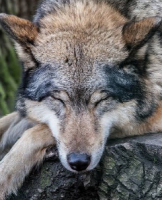 People who claim to be therians have their own idea of where the line is drawn, yeah, a line unique to them. As long as you consider your animal to be nonhuman, I believe therianthropy starts with the faintest sense of its presence. ("Their" presence in case of a polytherian or -kin, just to complete)
What others have touched upon here, namely that human beings aren't that far apart from animals, is what I would consider very important to hold into account as well. It's no secret that humans and animals have common ancestors, so it's not that hard to believe that their traits both can overlap and therefore can be mistaken for those of solely a nonhuman easily. Happily even, in case you're eager to explore the community like many of us do. Guess it depends largely on what the individual thinks of their traits. Do they consider them to be atypical for human beings? Are the traits so tied into their personality that it means it impacts their functioning, reasoning, thinking under daily circumstances highly? And how do we interpret the verb "to impact"?
Well, according to my reasoning, there is an impact from the moment you believe some of your actions stem from an atypical, alternate, nonhuman influence. This influence doesn't have to be tied to a certain and constant trigger either. Sometimes, it depends on how we're feeling (sad, emotional, sleepy, angry,...) that allows us to shift or act more animal-like but it doesn't have to be the case each time that trigger frequents. Feeling other than human is not always something concrete like a shift, a vocalization or a dream of sorts. It's also, like I've been meaning to say too, about feeling distinctly off among humans. Abstract yes, but... Feeling off really needs to be present. Not all the time, but it appears to be a commonality in many.
Now, a few psychiatric conditions may cause disassociation from human beings or the feeling of being alienated among them. Heck, even neurodiversities may contribute to that feeling also, even if those aren't exactly therianthropy, the notion that one doesn't belong is as equally real as it is with a therian, methinks.
In conclusion, things like these are highly individual. People who consider themselves wolves, yet aren't according to our principles or understanding, may as well be considering there are an equal set of wolves as there are individuals. So, what we should do is listen to each other and not dismiss others' beliefs because of the differences there may be.
|
|
| RE: Your opinions on microlabels? |
|
Posted in: Introduction to Therianthropy Posted by: MoonwatcherLynx - 2026-04-30 17:06
|
|
 I think microlabels are fun to use, and that if someone wants to use one, they should! However, the problem is when beings think that others should know what it means already, or when they tell others to use them. We also need to make sure not to scare away newcomers with fancy terms and complicated words!
|
|
| RE: Your opinions on microlabels? |
|
Posted in: Introduction to Therianthropy Posted by: Lupus Ferox - 2026-04-30 16:12
|
|
When coining terms, the coiner usually forgets, be it deliberately or not, to extend their terminology to broader audiences as to make new terms known. The disadvantage is that audiences forget to pick up on it, so that the work for those involved turns out in vain. To me, it just sounds as if coiners just want to feel special about themselves, thus breathing life into something that maybe isn't relevant or will be easily forgotten about instead. I'm with @Song on this one. I like the terms to be broad and somewhat abstract, so that more people will actually question themselves or ask for advice before joining. These are discussion-heavy forums, so let the terminology be ready to allow discussion like that. Besides, when they're abstract, for people who define themselves as therians, it can be more comfortable for them to use them. Self-explanatory terms, microlabels or whatever don't have this advantage. They serve the purpose of this one dude (or lass), not necessarily representing the whole, wider community. I just want to stress how childish it can be to say "ooh, I know of a new term no one else knows about and sounds cool to use, so why not consider it a term everybody should know about from now on." But that's a bit of a long, unpopular phrase I should have cut into parts. Temporary popularity, in other words. Fame maybe? Heh, I don't know exactly what they're after...
|
|
| RE: Wolf misconceptions |
|
Posted in: Introduction to Therianthropy Posted by: Vyneerdin - 2026-04-29 3:51
|
|
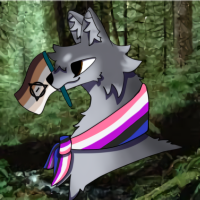 I am a timber wolf and am pretty chill and friendly. I often mix being with groups and taking time alone. I have a good combination. The only time I become aggressive is when I either get scared, feel threatened, or feel the need to defend myself or others. I'm not usually ever outright aggressive or mean. I suppose that is a very common misconception about wolves and wolf therians.
|
|
| RE: Wolf misconceptions |
|
Posted in: Introduction to Therianthropy Posted by: Song/Artemis - 2026-04-29 1:48
|
|
 No idea what anyone else has written yet so I may edit this to add anything else I'd like to say, but as a wolf therian this was actually very validating. I'm timid, anxious, dramatic and I'm a little bit of a follower, and for these reasons I can really relate to wolves. Obviously there's a lot more about me that makes me identify as a wolf, but it is nice to see people actually talking about TRUE wolf behaviours!
On not exactly a countering note but still a turn in the other direction, I would like to point out though that some therians identify as certain animals because of imprinting on how the media specifically portrays them. Valid therianthropes can find their true identities based off of cultural or media portrayals of the animals. :3
I would say my identities are probably a mix of both true animal behaviours and some media portrayals as well, due to simple environmental imprinting. Though, I have to say, for my wolf side my identity is very true to wolves' natural behaviours.
|
|
| RE: Wolf misconceptions |
|
Posted in: Introduction to Therianthropy Posted by: Lupus Ferox - 2026-04-28 7:18
|
|
I only get aggressive when I'm threatened/feel unsafe/forced to do something against my will. Before I got my current job, there was talk of starting in a psychiatric facility for people with multiple conditions. This was the only time I can think of where I actually felt threatened enough to allow hitting someone in the face, which was wrong of course if I think back to it. I was so scared of starting there, it triggered an aggressive outlet. They said afterwards that I'm an aggressive character and wasn't allowed in anymore, which is so wrong (I'm not aggressive at all, generally speaking...) but understandable from their point of view. Ever since, I'm afraid of being cornered like that again and taking myself to drastic measures, physical aggression in this instance. This incident has left its stains unfortunately, I can't unthink what happened there and am always on my toes for such an occurrence to happen again. In other words, I'm terrified of letting it out again like that if threatened. I'm embarrassed because of it knowing well enough it's wrong to act on said impulse.
|
|
|
![[-]](images/collapse.gif)



 I'm a wolf, I'm usually laid back and I'm very co-dependant and often get depressive in a lone environment. but I made my assertation mostly from phantom shifts and the vocal urges I have as well as a few other factors
 i personally love microlabels! i love seeing people coining and using hyper specific labels to best explain how they feel! we use lots of microlabels because of out autism and OCD and we get super excited when we find a new label that fits us!
