Strap in, this is a long ride! I've been working on this essay
ever since I've registered on TG, and have thought about it for way longer than that.
Alienation-based Psychological Theriantropy
I've been thinking about some possible psychological factors behind therianthropy and wanted to share a theory I've been developing. I'd love to hear other people's thoughts, experiences, and criticisms!
This isn't meant to explain every therian's experience. I'm interested in exploring a possible connection between feeling alienated from humanity, being overwhelmed by it, and finding a sense of belonging in an animal identity.
Alienation
I wonder whether feeling disconnected from humanity or human society might be one possible pathway to therianthropy.
Human life is full of complicated social expectations, unwritten rules, cultural norms, and responsibilities. We're expected to understand how to behave around others, build relationships, pursue certain goals, and fit into a society with its own ideas about what a normal or successful life looks like.
Not everyone finds this natural. Some feel as though they're constantly trying to understand a world everyone else seems to navigate effortlessly, others disagree with the rules they're expected to follow. Our modern socioeconomic systems are also far removed from the environments in which humans evolved.
This can create a sense of alienation: feeling like an outsider, fundamentally different from other people, or simply not at home in the human world.
I wonder whether, for some therians, this feeling could contribute to the appeal of a nonhuman identity. That doesn't necessarily mean disliking people or struggling to form relationships. Someone can have friends, love their family, and enjoy human company while still feeling disconnected from humanity as a whole. They might participate in human society while feeling they must suppress parts of themselves to fit in.
Alienation can take different forms:
- Social: struggling to fit in with others.
- Cultural: rejecting society's expectations and values.
- Existential: feeling disconnected from what it means to be human.
P.S. Marx also had some interesting ideas about alienation under capitalism: how workers can become estranged from their labour, the products they create, one another, and even their own species-being. I wonder whether this kind of alienation might contribute to feeling like a lone speck in a world of institutions and machine. I'll leave the political side of this topic for another essay!
The perceived simplicity of animal existence
Human society is extraordinarily complicated. We have jobs, money, laws, bureaucracy, social hierarchies, and expectations about our futures. Many of our worries aren't about immediate survival, but about the systems we've built around it.
Animal life can look very different, at least from a human perspective. An animal's needs seem easier to understand: finding food and water, seeking shelter, avoiding danger, exploring, and interacting with others. Its life appears more directly connected to its body and surroundings than to layers of social expectations.
Of course, animal life isn't objectively simple or easy. Animals face hunger, injury, competition, predators, and complicated social relationships of their own. What interests me is the perception of simplicity.
For someone overwhelmed by human society, animal existence might feel more immediate and tangible, closer to one's body, surroundings, and basic needs. Most of us are far removed from the processes that sustain us: building shelter, hunting or growing food, and finding water. Our survival depends on complex systems that separate us from the things we need to live, making even fundamental needs feel abstract.
Animal life, by contrast, may appear more straightforward, with a more direct connection between an animal's actions, its environment, and its immediate needs.
The burden of human sapience
There’s another aspect of the human experience worth considering: our own minds.
Human sapience allows us to imagine, plan, and reflect, but it can also become exhausting. We worry about things that may never happen, replay embarrassing moments, imagine every possible failure, and get caught in spirals of anxiety or unanswerable questions. Our self-awareness can make us painfully conscious of our flaws, social standing, mortality, and the uncertainty of existence.
For some people, the mind can feel less like a tool they control and more like something they can’t escape. I wonder whether this might contribute to the appeal of animal identity.
When imagining life as an animal, one might picture an existence less dominated by abstract worries and constant self-evaluation. Instead of endlessly thinking about life, one might imagine simply experiencing it: exploring, resting, seeking comfort, and responding to the world around oneself. Perhaps there’s something appealing about being more present in one’s body and surroundings.
This isn’t to suggest that animals are mindless or free from suffering. Many have complex cognitive abilities, emotional lives, memories, and social relationships. Rather, I’m interested in how humans might imagine animal existence when exhausted by their own thoughts. It’s kind of ironic: imagining an existence free from human worries is itself an exercise of the cognition that can amplify those worries.
Within this theory, the burden of human sapience could be another source of alienation. Someone might feel not only out of place in human society, but also exhausted by their own mind. I wonder whether, for some people, exhaustion with human cognition might contribute to the appeal of a nonhuman identity.
The role of neurodivergence, trauma, race, queerness, and disability
These experiences can sometimes contribute to alienation, particularly through the ways people are expected to behave, how they're treated by others, and how comfortably they can exist in the world around them.
A neurodivergent person might find certain social conventions confusing or exhausting, or feel compelled to mask parts of themselves to avoid standing out. Someone who has experienced trauma might struggle to feel safe around others. A disabled person might face inaccessible environments, stigma, or expectations that don't account for their needs. People of color may feel alienated in predominantly white spaces, particularly when they experience racism, stereotyping, or pressure to navigate cultural expectations that don't reflect their own. Queer people may feel similarly when surrounded by assumptions about gender, sexuality, relationships, or what a conventional life should look like.
Such experiences can leave someone feeling that the human world wasn't built with them in mind.
However, none of these experiences is a requirement for therianthropy, nor does any of them automatically explain someone's identity. Not every person belonging to said groups feels alienated, and not everyone who feels alienated has these experiences.
Someone might simply have different interests, values, or priorities. They might feel out of place because their personality doesn't fit their environment, their interests or political views are uncommon where they live, or they've never felt particularly connected to mainstream culture. These factors may contribute to alienation for some people, but the relationship is likely individual and complicated.
Why animals, then?
Alienation from humanity doesn't automatically lead to animal identity. People respond to it in many ways, from alternative communities and creative pursuits to spiritual movements or a more solitary lifestyle. So what might make a nonhuman identity resonate specifically?
I suspect alienation alone isn't enough. There may also be an existing affinity for animals, a particular experience of one's body, or a sense of self that doesn't fit comfortably within human categories. Many therians report phantom sensations or feeling that their body doesn't match their internal sense of self, which may be analogous (or, somewhat opposite) to body integrity dysphoria. The latter usually means a desire to get rid of an existing limb, while the therian experience is generally a desire to have a limb your theriotype possesses, or for your limb to match that of the animal.
Animals might also feel easier to understand than humans, with more tangible needs and interactions that seem less dependent on complicated social conventions. For others, animal identity may offer a connection to the body, senses, environment, or instinct, or hold spiritual or emotional significance. Cultural associations with different species can shape these connections, too.
Still, I wouldn't want to reduce therianthropy to identifying with an animal because it represents qualities one admires. The experience can be much more fundamental to someone's sense of self.
Perhaps these factors can intersect with alienation to make a nonhuman identity meaningful, though this won't apply to everyone. Personally, I haven't met many therians who seem entirely comfortable in human society. I wonder whether this varies between species, particularly for those associated with strong social bonds or close relationships with humans, like dogs. I'd be interested to hear others' experiences.
A personal example
Part of what led me to this theory was reflecting on my own experiences. I can hold a job and be social, I’m generally able to make friends and interact with people, but I don't always feel comfortable being myself around them.
Social interaction can feel like following a set of mental rules: how I'm supposed to behave, which parts of my personality are appropriate to show, and whether certain interests might seem embarrassing. I can participate in human social life while presenting a version of myself that's easier for others to understand. There are spaces where I feel freer to express interests I'd otherwise keep to myself, such as niche online communities. Animals have also often felt easier to understand and relate to than people.
For me, the distinction
between being able to function in human society and
feeling like yourself in it has become an important part of how I understand my own nonhuman identity.
Of course, this is only my experience. A therian might feel deeply connected to human society and still experience a strong nonhuman identity. I include this example because outward social functioning doesn't necessarily reflect someone's internal sense of belonging.
Humanity's history with animals
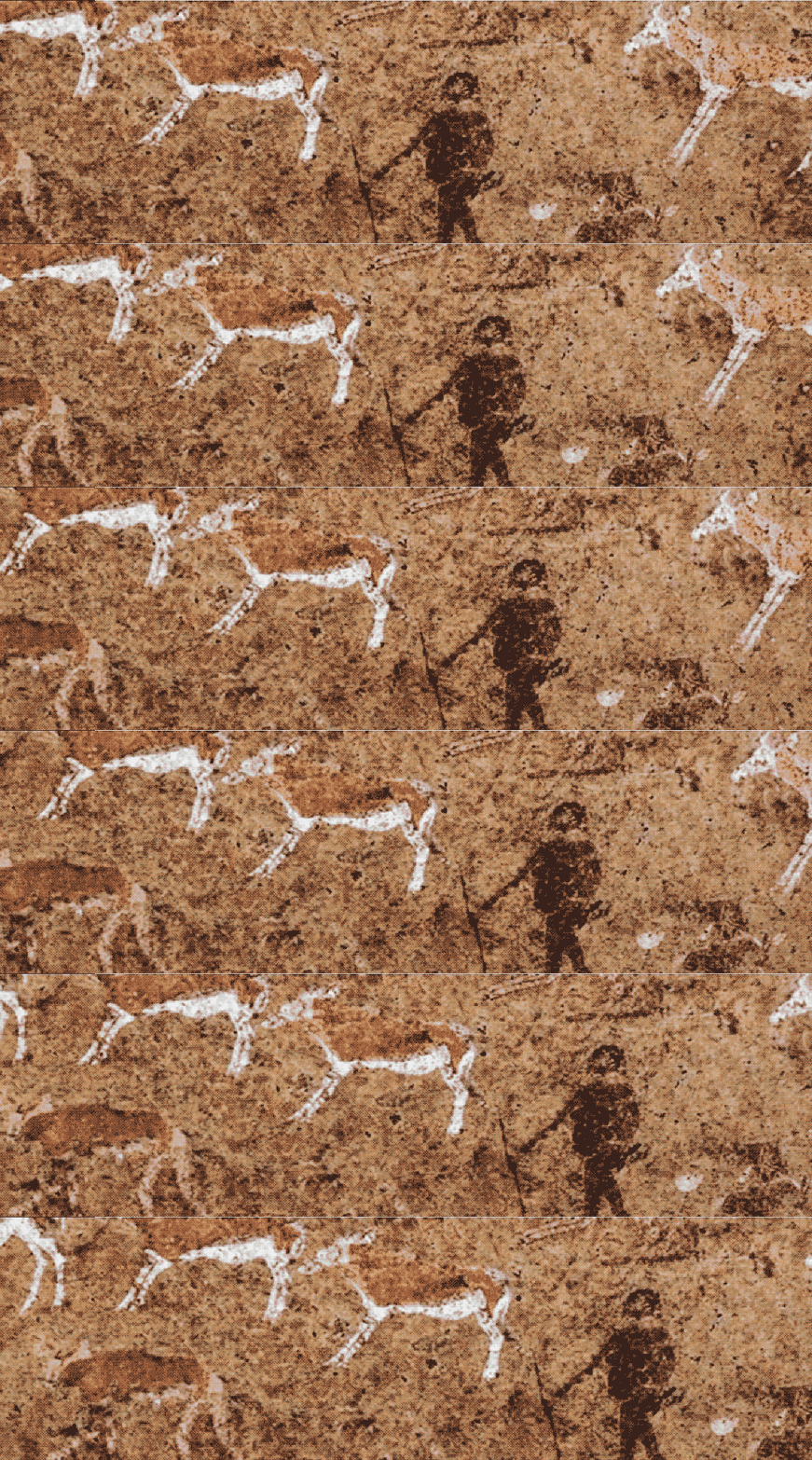
I also wonder whether our long history with animals provides some context. Humans have lived alongside animals throughout our evolutionary history, relying on them for survival while developing deep cultural and spiritual connections with them. Animism, one of humanity's oldest and most widespread forms of religious belief, reflects worldviews in which animals and other parts of the natural world may possess spiritual significance or personhood.
Throughout history, animals have been revered, treated as kin, and associated with powers beyond the purely practical. These traditions don't establish that ancient people experienced therianthropy as we understand it today, but they show how deeply animals have shaped human understandings of existence. Beliefs in human-animal transformation also appear in many cultures, sometimes connected to spiritual practices or rituals.
Perhaps this longstanding connection helps explain why animal identity can hold such profound personal meaning for some people.
Identity and choice
People sometimes treat identity as either something we consciously choose or something completely fixed and unchangeable. I think there's room between these extremes, and that the therian community may sometimes place too much emphasis on therianthropy being entirely involuntary.
We can choose how to express ourselves: which labels to use, which communities to join, and how much of ourselves to share. But we can't necessarily choose the underlying feelings, preferences, or experiences that make these choices meaningful.
Consider someone who rejects modern society and technology (a Luddite, for this example) and would prefer a quieter life away from them. They might have to remain in modern society out of necessity, but that doesn't mean they can simply choose to enjoy the things they find alienating. Internally, they remain a Luddite, even if the life they’re living is forcing them to perform as an average person.
I think the same distinction matters when discussing therianthropy. Choosing a label or how to express an identity doesn't necessarily mean choosing the internal experience itself. An identity might develop through temperament, personal experiences, and self-understanding without being a conscious decision.
This doesn't mean identities are necessarily fixed from birth or can never be reinterpreted. It simply means that experiencing an identity and choosing how to understand or express it are different things. We may not choose what we feel, but we can still have some agency in how we make sense of it.
Conclusion
Putting these ideas together, I wonder whether one possible pathway to therianthropy might look something like this:
- A person has certain traits, experiences, interests, or ways of understanding the world. These shape how they relate to humanity, their own consciousness, and the nonhuman world.
- They may feel alienated from human society, overwhelmed by its expectations, exhausted by their own thoughts, or simply more connected to animals. Trauma, neurodivergence and disability may be large contributors in said feelings.
- These feelings may intersect with an existing affinity for animals or a particular sense of identity or bodily experience, making a nonhuman identity especially meaningful to them.
- Over time, these experiences may become part of how they understand themselves, even if they initially lack the language to describe them.
This isn't a universal sequence. Someone might recognize their animal identity before feeling alienated from humanity, or feel at home in human society while still experiencing a strong nonhuman identity. Alienation might shape how someone understands their identity rather than cause it, and vice versa.
Many people feel alienated without identifying as nonhuman, and some therians experience little alienation. I see this as one possible explanation for some experiences, not a universal theory of therianthropy.
I wonder if, for some people, animal identity resonates because it offers a way to understand themselves outside the expectations and complication of human life. Animals might represent an existence that feels more immediate, embodied, and connected to the environment, while our long relationship with them gives them a powerful place in our imaginations.
I also wonder whether modern life is so far removed from the conditions in which
Homo sapiens evolved that it can leave us feeling disconnected from our own nature. Perhaps identifying as a nonhuman animal can feel more authentic, or better reflect a desire for a way of living that feels more instinctive and embodied.
And perhaps, for some people, the experience has nothing to do with alienation at all.
I'd love to hear what others think:
- Do you feel alienated from humanity, or comfortable being part of human society?
- Did you feel disconnected from humanity before recognizing your nonhuman identity, or did that feeling develop afterward?
- Does the idea of animal existence appeal to you because it seems more immediate or less burdened by human social expectations and/or abstract thought?
- Have neurodivergence, trauma, disability, or other life experiences, such as your race or queerness, shaped how you relate to humanity or to your nonhuman identity? (Share only what you're comfortable discussing. I've read many threads on this forum about this question, so I already know that many of us see at least one of these aspects as fundamental to our identity.)
- Do you feel your animal identity developed independently of your relationship with human society?
- If alienation can lead people in so many different directions, what do you think makes an animal identity resonate specifically?
Special thanks to everyone who has shared their theriantropy theories and experiences on this forum, as they have been fundamental to my ability to write this essay.